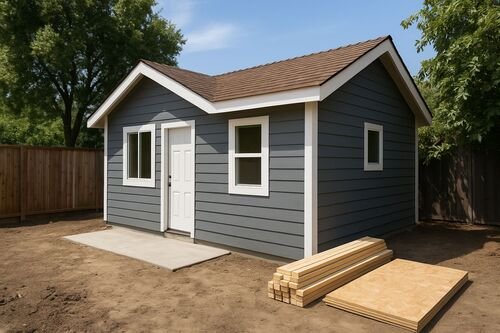
ADU Builders California is integrating solar photovoltaic and battery storage systems into accessory dwelling unit construction across the state. California has led the nation in residential solar adoption, and recent grid policy changes have reinforced the value of pairing solar generation with battery storage. For new ADU construction, planning solar and battery integration during initial design produces better outcomes than retrofitting these systems after the unit is occupied. The company brings system level coordination to projects across California.
Solar plus battery integration affects roof design, structural capacity, electrical infrastructure, panel placement, and interior space requirements. When these considerations are part of the original design, the resulting installation is cleaner, more efficient, and less expensive than retrofit work. The company plans each ADU around the homeowner’s solar and battery goals from the first design conversation.
Why Solar Plus Battery Matters in California
California’s grid has changed substantially in recent years. Time of use electricity pricing rewards consumption during off peak hours and penalizes consumption during evening peak periods. Net metering rules have evolved to reduce the value of solar exports during low demand periods and increase the value of self consumption. Battery storage allows homeowners to consume their own solar generation during high value periods, which improves the economics of solar investment.
Beyond economics, battery storage supports resilience during grid outages. California’s wildfire prevention power shutoffs and other grid interruptions have made backup power valuable for many households. An ADU equipped with solar and battery can maintain critical functions during outages, support household resilience, and reduce reliance on grid power during peak periods.
Roof Design for Solar Performance
Solar performance starts with roof design. Roof orientation, slope, structural capacity, and shading all influence how much energy a solar array can produce. The company plans ADU roofs for solar performance during initial design. South facing roof areas with appropriate slope deliver strong solar output across the year. West facing roofs may also perform well, particularly when paired with battery storage that captures afternoon generation.
Structural capacity must support the additional load of solar panels, mounting systems, and any future expansion. The company specifies structural assemblies that accommodate solar loads without requiring later reinforcement. Roof penetrations are planned to minimize future leak risk while supporting the panel layout.
Electrical Infrastructure for Solar and Battery
Solar and battery systems require dedicated electrical infrastructure. The main service panel must have capacity for both the ADU’s load and the solar inverter. Battery storage requires a battery rated breaker, appropriate disconnects, and integration with the main panel or a critical loads subpanel. Conduit pathways from the roof to the inverter location, from the inverter to the panel, and from the battery to the panel all need planning during construction.
The company specifies electrical infrastructure that supports current solar and battery installations and future expansion. Conduit chases sized for additional capacity, panel space reserved for future circuits, and accessible junction points all support long term flexibility. Across California ADU projects pursuing solar and battery integration, ADU Builders California brings electrical planning experience that supports both current installations and future technology cycles.
Inverter Selection and Placement
String inverters, microinverters, and battery integrated inverters each offer different trade offs. String inverters convert direct current from multiple panels through a single device, which is efficient but creates a single point of failure. Microinverters convert direct current at each panel, which improves performance under partial shading and supports panel level monitoring. Battery integrated inverters combine solar and battery management in a single device, simplifying installation and supporting integrated control.
Inverter placement matters for performance, accessibility, and aesthetics. Outdoor inverter installations require weather rated equipment and shading. Indoor installations require ventilation and clearance. The company plans inverter location during construction so the finished installation looks intentional and operates well.
Battery Capacity Sizing
Battery capacity sizing depends on the homeowner’s goals. Homeowners focused on time of use bill optimization may benefit from smaller battery capacity sized to shift evening loads. Homeowners focused on resilience during outages may benefit from larger capacity sized to support critical loads for extended periods. Homeowners focused on maximum self consumption may target capacity that absorbs most daily solar generation for evening use.
The company evaluates each homeowner’s goals during design and specifies battery capacity that matches. Critical loads identification supports outage planning. Time of use rate analysis supports bill optimization planning. Self consumption goals support sizing for daily energy shifting. The company integrates these considerations into a complete system specification.
Critical Loads Panels and Backup Configuration
Battery systems can power critical loads during outages, full home backup, or partial backup depending on configuration. Critical loads panels separate essential circuits from convenience circuits so battery capacity supports the most important functions during extended outages. Refrigeration, well pumps, medical equipment, communications, and minimum lighting often qualify as critical loads.
The company plans critical loads panels during construction so circuit assignments support the homeowner’s resilience goals. Future critical loads expansion is supported through panel capacity planning. Generators or other backup sources can be integrated with battery systems where appropriate.
Smart Controls and System Monitoring
Modern solar and battery systems include monitoring and control capabilities that support optimization. Time of use scheduling, weather forecasting integration, and grid event response all benefit from smart controls. Monitoring platforms provide visibility into generation, consumption, battery state of charge, and grid interaction.
The company integrates these controls during construction so the homeowner has access to monitoring from the first day of operation. Networking infrastructure supports cloud based monitoring. Local interfaces support direct control when network connectivity is unavailable.
Permits, Interconnection, and Utility Coordination
Solar and battery installations require permits from the local building department, interconnection agreements with the utility, and inspections at multiple phases. The company manages these processes as part of project delivery. Permit packages document the solar and battery system, electrical service modifications, and structural attachments. Interconnection applications proceed in parallel with construction to support timely activation when the system is ready.
Utility coordination addresses metering, grid interaction rules, and any incentive programs available at the time of installation. The company tracks evolving utility programs and helps homeowners take advantage of incentives that match their installation.
Long Term Value of Solar Plus Battery ADUs
ADUs equipped with solar and battery deliver low operating costs, resilience benefits, and strong value in California’s evolving energy market. They also align with the state’s continued movement toward clean energy and grid modernization. Homeowners benefit from reduced utility bills, backup power capability, and properties that perform well in both rental markets and resale.
About ADU Builders California
ADU Builders California is a statewide residential construction company specializing in accessory dwelling units, solar and battery integration, junior ADUs, garage conversions, and related residential construction services. Based in Sacramento and serving homeowners across California, the company focuses on integrated energy systems, durable construction, and long term performance.
ADU Builders California
1610 R St Suite 300
Sacramento, CA 95811, United States